
That first handful of Swedish candy can be a tiny plot twist. You expect a familiar gummy bear situation, then get a firmer chew, a brighter fruit note, and sour coating that makes your cheeks do the little wow face. So, why Swedish gummies taste different from many American gummies? It is not one secret ingredient. It is a whole candy-making point of view: texture gets real attention, flavors are often allowed to be punchy without becoming perfume-y, and sweet-sour balance is treated like serious business.
For Americans used to soft, very sweet, fruit-snack-adjacent candy, Swedish gummies can taste surprisingly grown-up. They are still playful, obviously. A foam banana is not exactly wearing a blazer. But the flavors, bite, and finish often feel more deliberate.
Why Swedish Gummies Taste Different
Swedish gummies are shaped by the way candy is made, sold, and eaten in Sweden. Recipes vary by brand and product, but a few patterns show up again and again: a firmer or bouncier texture, distinct flavor profiles, a more noticeable sour edge, and a finish that does not always leave your mouth coated in pure sugar.
The biggest difference is often balance. A gummy can be sweet, tart, fruity, and chewy at the same time without one note flattening the rest. That is why a bag can disappear faster than you planned. One piece turns into a casual five-piece quality-control session.
The texture is part of the flavor
Texture changes how flavor lands. A very soft gummy melts and releases its sweetness quickly. A firmer gummy asks you to chew a little longer, which makes the flavor unfold in stages. First comes the coating or outer sugar, then the fruit or berry note, then the lingering tang.
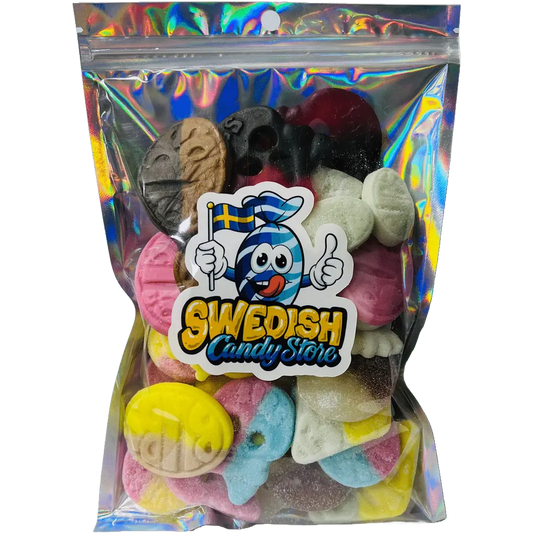
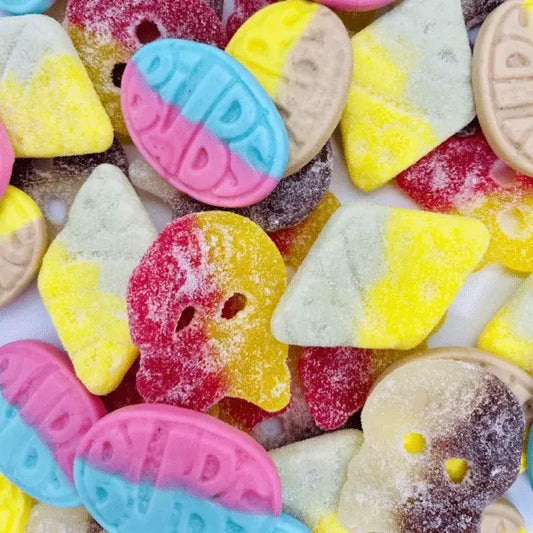
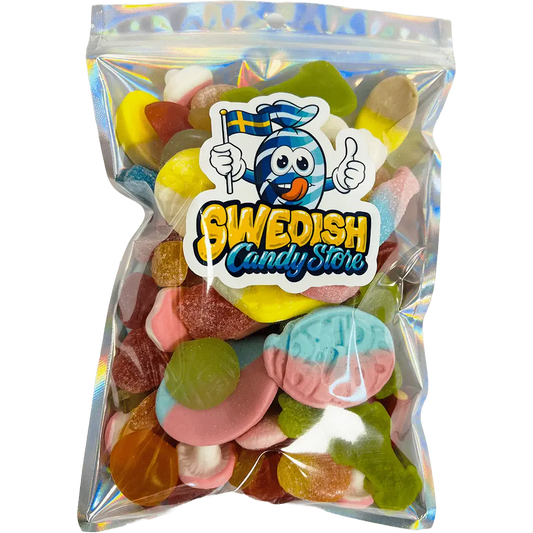
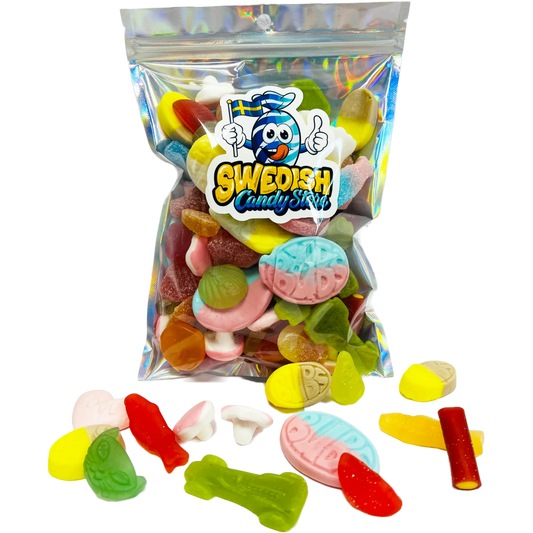
Many Swedish gummies have a springier, denser chew than the ultra-soft gummies common in the US. Some use gelatin, while others rely on starch, pectin, or other gelling systems. That is why the category is wonderfully varied. You may find a juicy, jelly-like fruit piece next to a foamy mushroom, a chewy skull, or a dense sour oval in the same pick-and-mix bag.
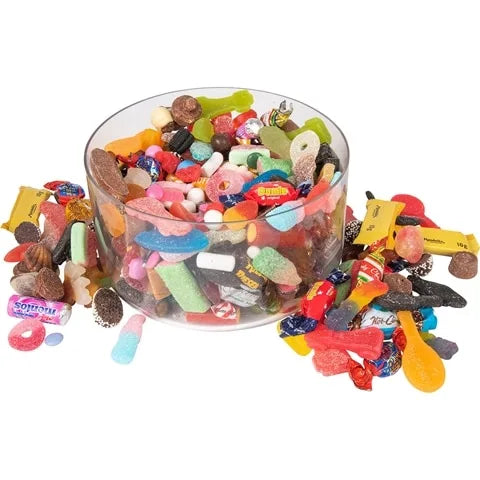
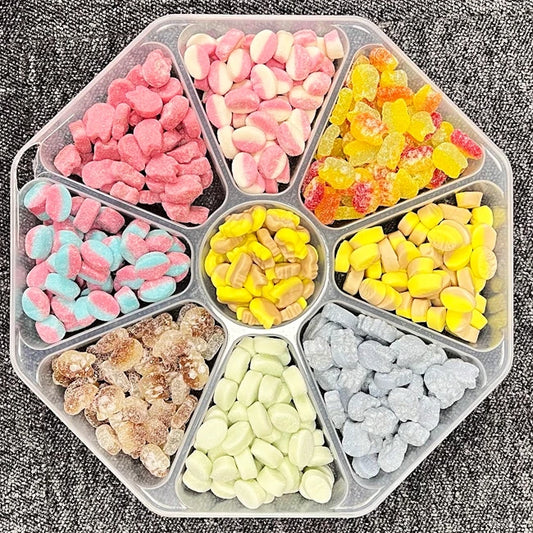
That variety is not a side quest. It is the fun. Swedish candy culture has long embraced mix-and-match candy walls, where different shapes and textures belong together. Your ideal mix might have peachy foam, sour berry gummies, chewy raspberry pieces, and salty licorice all hanging out like they were invited to the same wildly specific party.
Sweetness is not the only headline
American candy can be deliciously loud with sweetness. Swedish gummies can be loud too, but they often make room for acidity, fruitiness, or a slightly bitter edge. The result is candy that can taste less one-note, even when it is shaped like a cartoon fish.
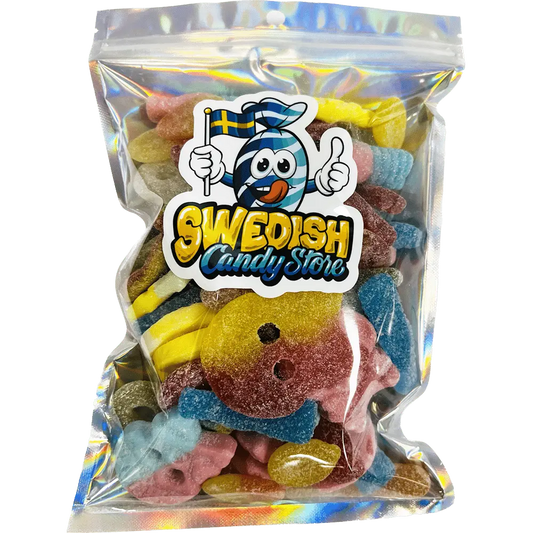
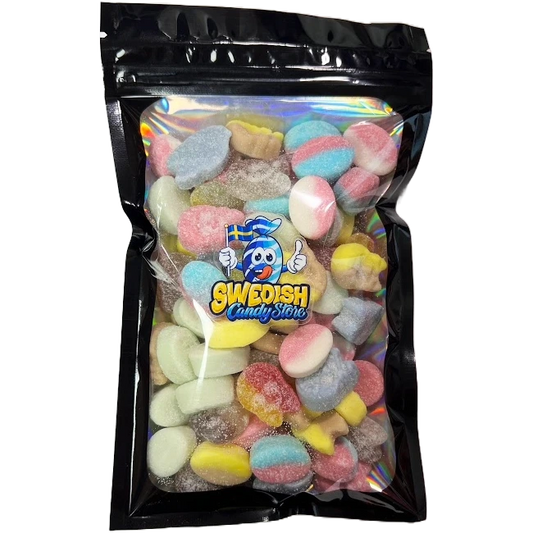
Acids such as citric acid, malic acid, and tartaric acid help create sourness, but the timing and amount matter. A sour coating hits first. Acid blended into the gummy itself creates a longer, deeper tang. Some gummies do both, which is how a small pink-and-blue piece can bring enough drama to make you reach for water and then immediately reach for another one.
This does not mean every Swedish gummy is aggressively sour. Plenty are sweet, creamy, mellow, or softly fruity. The difference is that sourness is often used as a flavor tool, not just a stunt. It can sharpen strawberry, make lemon taste fresher, or keep a tropical gummy from becoming syrupy.
Fruit Flavor That Tastes More Specific
A lot of Swedish gummies lean into flavors that feel more defined than a generic red or blue mystery fruit. Think raspberry, sour apple, pear, elderflower, strawberry, watermelon, banana, forest berry, or cola. Those flavors may still be candy-world interpretations, not a farmers market smoothie, but they tend to have a clearer identity.
Berry flavors are especially big in Scandinavian candy. Raspberry, strawberry, and mixed berry notes show up in all kinds of forms, from soft foam to intense sour gummies. You will also see flavors that feel less common in a standard American candy aisle, such as pear, rhubarb, or elderflower-inspired sweets. That novelty is part of the pull, but it is not novelty for novelty’s sake. These flavor profiles are familiar in Nordic food culture, so they feel right at home in candy.
There is also a difference between smelling fruity and tasting fruity. Some candies lead with a big aroma that fades fast after the first bite. A well-made gummy often keeps its flavor through the chew and leaves a clean finish after. Swedish candy fans tend to notice that finish. If the last note is bright berry or tart citrus rather than only sugar, the next piece becomes very tempting.
Foam, fizzy, and layered flavors add personality
Swedish candy makers love contrast. A foamy bottom can make a gummy feel creamy and soft against a chewier top. A fizzy coating can add a quick sparkle. A two-color piece may pair sweet strawberry with tart lemon, or tropical fruit with a sour shell.
These details change more than appearance. Foam can soften sharp fruit flavors. Sugar crystals create crunch before the chew. A sour exterior and sweet center create a little flavor storyline in one bite. No, it is not a three-act prestige drama. But it is more exciting than a gummy that tastes exactly the same from start to finish.
The Pick-and-Mix Culture Raises the Bar
In Sweden, pick-and-mix candy is a beloved ritual, especially around the weekend. The idea is simple: build your own bag from a huge assortment. The effect is not simple at all. It creates candy shoppers with opinions. Strong opinions. About chewiness, sour coatings, foam ratios, and whether banana gummies deserve respect.
When people regularly choose individual pieces instead of grabbing one uniform bag, each candy has to earn its spot. That encourages a wide range of textures, flavors, and shapes. It also makes Swedish candy feel more collectible and personal. One person builds a sour-only masterpiece. Another creates a pink, foamy, strawberry-forward bag. Someone else goes full licorice menace. All valid.
This culture also explains why Swedish gummies can feel more playful than a typical single-flavor package. A mix is designed for contrast. You might follow a tangy sour skull with a soft marshmallowy piece, then reset with a cola bottle. The variety keeps your taste buds curious instead of bored halfway through the bag.
Ingredients Matter, but the Recipe Matters More
It is tempting to say Swedish gummies taste different because they use better ingredients. Sometimes a product may use fruit juice, fruit concentrates, natural colors, or specific flavoring approaches that appeal to you. But “better” is not a universal rule, and it is not the whole story.
The recipe, ratios, cooking process, moisture level, gelling agent, acid blend, and coating all matter. Two gummies can use similar ingredients on paper and taste completely different in real life. One may be soft and sweet; the other might be bouncy, tart, and packed with a berry flavor that sticks around.
Dietary preferences can change the experience, too. Gelatin-free and vegan gummies often use pectin or starch-based textures, which can be softer, more jelly-like, or pleasantly firm depending on the recipe. Sugar-free candy has its own flavor and cooling effects based on the sweeteners used. Gluten-free, halal, and vegan labels are useful for choosing candy that fits your needs, but they do not automatically predict whether a gummy will taste traditionally Swedish. The individual product still calls the shots.
Freshness Makes a Bigger Difference Than People Think
Even great gummies can lose their magic when they sit around too long. Gummies can dry out, become hard, lose their sour coating, or pick up moisture that turns sugar crystals sticky. Fresh candy has a more satisfying chew and clearer flavor, especially with sour, foamy, or sugar-coated pieces.
That is one reason imported candy is worth buying from a retailer that understands how it should be stored and moved. A fresh sour gummy should have zip. A fresh foam candy should feel soft, not stale. A fresh fruit gummy should taste like it showed up ready to perform, not like it has been waiting under a convenience-store light since last summer.
At Swedish Candy Store, the fun is getting to build a mix that proves the point for yourself. Pair a classic fruit gummy with a sour piece, add a foam candy, then toss in one wild-card flavor. Your mouth will understand the assignment.
What to Try First If You Are New to Swedish Gummies
Start with contrast rather than buying a giant bag of one thing. Choose a few sour fruit gummies, a couple of foam-and-fruit pieces, and one classic chewy candy with a flavor you already love, such as strawberry, peach, or cola. This gives you a quick read on what you like: sharper sourness, plush foam, dense chew, or fruit-forward sweetness.
If you normally avoid sour candy, do not assume Swedish gummies are not for you. Go for strawberry foam, banana, peach, or sweet berry pieces first. If you live for sour belts and face-puckering candy, try sour skulls, berry gummies with sugar coating, or citrus-forward shapes. And if you are the kind of person who sees a pear gummy and thinks, “Yes, that is exactly the energy I need,” welcome. You are going to have a great time.
The best Swedish gummy is not necessarily the loudest, sourest, or most viral one. It is the one that makes you pause after the first bite, inspect the bag, and quietly decide that sharing was an ambitious idea.