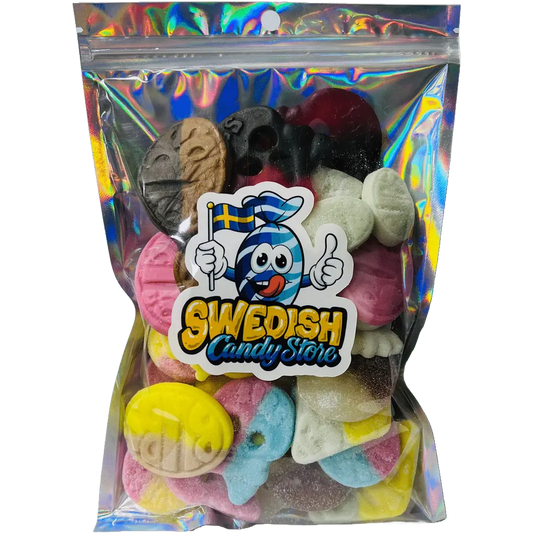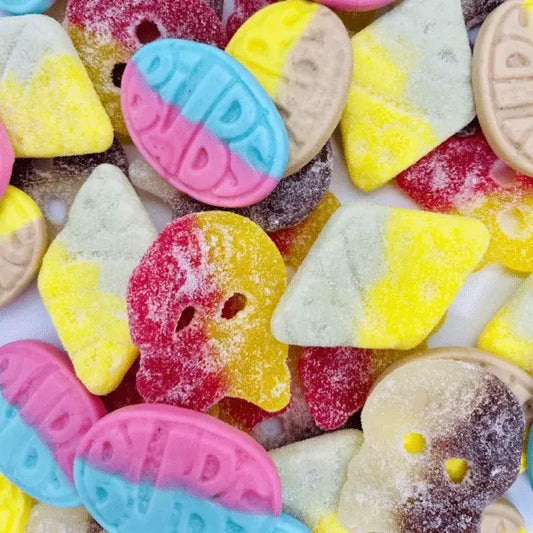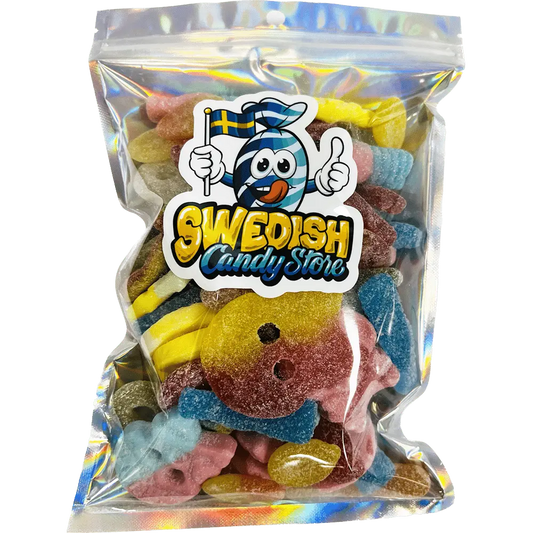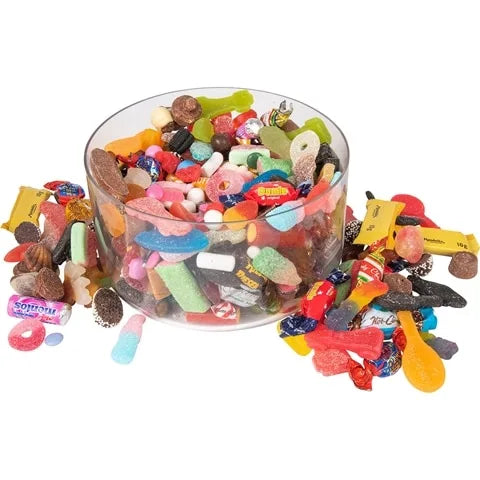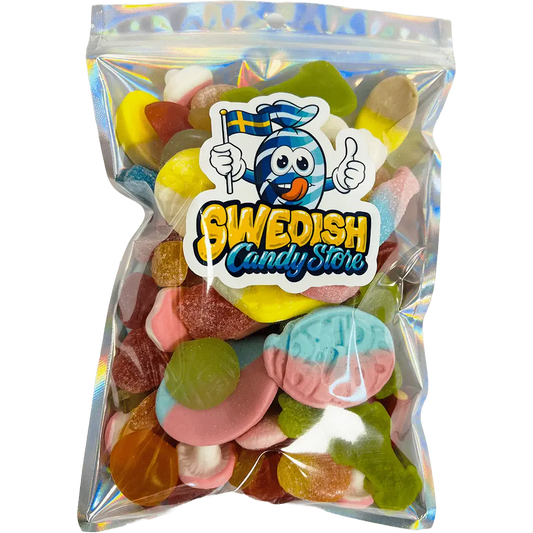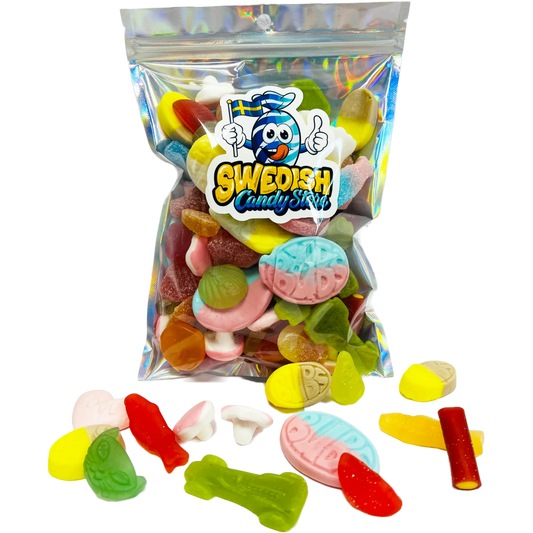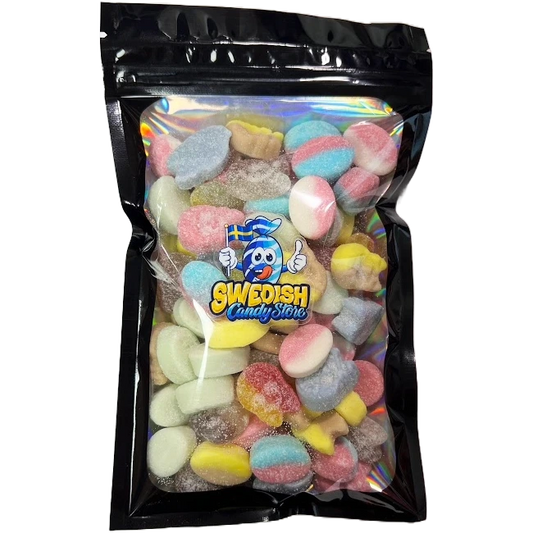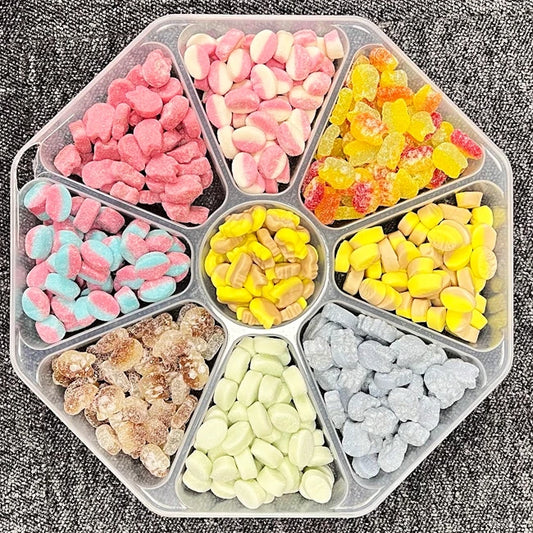

That candy bag made it home. Huge win. Now comes the part that decides whether your sour skulls stay perfectly springy or turn into a suspiciously hard little science project: knowing how to store imported candy after the first handful disappears.
Swedish and Nordic sweets are made to be enjoyed, not displayed indefinitely on a sunny kitchen counter. Their fruit flavors, fizzy sour coatings, creamy fillings, and silky chocolate all react differently to heat, air, humidity, and strong pantry smells. A little smart storage keeps your candy stash tasting like it just arrived, whether you are guarding a personal pick-and-mix haul or hiding the good stuff from your roommates.
How to Store Imported Candy by Candy Type
The best storage method is not one-size-fits-all. A bag of BUBS gummies and a bar of Marabou have very different ideas about a good time.
Gummies, sour candy, and foam sweets
For gummies, sour pieces, fruit chews, and foam candy, aim for a cool, dry cabinet away from direct sunlight. Room temperature is usually ideal, roughly 60 to 70°F. Keep the bag sealed tightly after opening. If it has a resealable zipper, press out as much extra air as possible before closing it. If it does not, move the candy into an airtight container or zip-top bag.
Air is what turns soft gummies stiff, while moisture can make sour sugar coatings go sticky and clumpy. That means the refrigerator is usually not the hero here. Fridge humidity can dull a crunchy sour finish and make candy sweat when you bring it back to room temperature.
If you made a big custom mix, divide it into a few smaller airtight containers instead of opening one giant container every day. Less opening means less air, humidity, and opportunistic snacking. Okay, it does not solve the snacking part, but it helps with freshness.
Chocolate and chocolate-covered candy
Chocolate is dramatic. It prefers a stable, cool, dry place, ideally between 60 and 68°F. A dark cupboard or pantry is better than a countertop near the oven, dishwasher, or sunny window. Keep it in its original wrapper whenever possible, then place it in an airtight container if your pantry carries strong odors from coffee, spices, or onions. Chocolate picks up surrounding smells more easily than anyone invited it to.
Avoid the refrigerator unless your home is consistently warm and there is no cool cabinet available. Chilling chocolate can cause condensation when it comes back out, which may lead to sugar bloom: pale, dusty-looking streaks on the surface. It is still safe to eat, but the texture and appearance can be less dreamy.
If you must refrigerate chocolate during a heat wave, wrap it tightly, place it inside an airtight container, and let it warm to room temperature before opening the container. This gives condensation fewer chances to crash the party.
Licorice, marshmallows, and soft-filled candy
Soft licorice, marshmallows, caramel-filled pieces, and creamy sweets need an airtight home. They are especially likely to dry out when exposed to air. Store them in a cool, dry cupboard and keep different flavors in separate containers when you can. A salty licorice piece sharing space with a strawberry marshmallow may be an exciting flavor experiment, but it is not always the one you meant to run.
For very soft candies, original packaging is helpful because it is designed to hold moisture at the right level. Once opened, a snug container is your backup plan. Do not leave these treats in loosely folded bags for days unless you enjoy candy with the chew of a pencil eraser.
Hard candy and lollipops
Hard candies are low-maintenance, but humidity is their mortal enemy. Store them tightly sealed in a dry cabinet, far from steam and heat. In humid climates, consider putting individually wrapped hard candy into an airtight container rather than leaving the whole bag open. This prevents pieces from fusing into one colorful candy boulder.
Pick the Right Spot in Your Kitchen
Your kitchen may look harmless, but not every cabinet is candy-friendly. The cabinet above the stove gets warm. The shelf next to the dishwasher gets steamy. The fruit bowl gets sunny. None of these are ideal for your imported candy collection.
Choose an interior pantry shelf or a lower cabinet that stays dark, dry, and relatively cool. Keep candy away from direct light, which can fade colors and affect flavor over time. This matters particularly for bright gummies, chocolate, and candies with delicate fruit or berry flavors.
If your house runs hot, such as during a summer without strong air conditioning, a basement pantry or a temperature-stable closet can be a better option than the kitchen. Just make sure the area is dry. Cool plus damp is not a candy upgrade.
Keep Flavors From Becoming Chaos
Imported candy is often more flavor-forward than standard grocery-store sweets. That is part of the fun. It is also why storage deserves a tiny bit of strategy.
Strong flavors like salty licorice, mint, coffee, and sour fruit can mingle with other candy if they share an unsealed container. Store pungent varieties separately, especially if you are saving chocolate or marshmallows nearby. Original packaging works well for unopened products because it preserves the intended flavor and texture. Once a bag is open, use clean, dry containers with tight-fitting lids.
For pick-and-mix candy, sort by type rather than just color if you are storing it for more than a few days. Keep gummies with gummies, sour-coated pieces with sour-coated pieces, and chocolate separately. A wild party of fruity gummies is excellent. A melted chocolate-coated gummy glued to a fizzy sour piece is less of a vibe.
Should You Freeze Imported Candy?
Freezing can work, but it is best for long-term storage, not for candy you plan to snack on this week. It is most useful for chocolate, unopened sealed bags, and certain chewy candies when you bought more than you can reasonably finish before the best-by date.
Wrap products well and place them in an airtight freezer-safe container or bag. The goal is to protect them from freezer odors and moisture. When you are ready to eat them, let the package thaw in the refrigerator first, then bring it to room temperature before opening. Slow thawing helps prevent condensation and texture changes.
Do not freeze candy simply because you are worried it will go bad tomorrow. Most shelf-stable sweets do very well in a cool pantry. Freezing is a backup move for bulk orders, not the default setting.
Check the Label, Then Use Your Senses
Imported candy may use a best-before date format that looks unfamiliar to US shoppers. Look closely at the packaging, as dates can be written day-month-year rather than month-day-year. When in doubt, read the label language around the date or check whether the day number could be higher than 12.
A best-before date usually speaks to peak quality, not an instant expiration cliff. Candy that is stored well often remains enjoyable afterward, though flavors, texture, and color can gradually change. Toss anything with an off smell, visible mold, unusual moisture, damaged packaging, or a texture that seems genuinely wrong. Chocolate bloom alone is generally a quality issue, not a safety emergency.
For dietary-specific treats, such as vegan, halal, gelatin-free, sugar-free, or gluten-free candy, keep the original package or label with the candy. Once loose pieces are mixed together, it is very easy to forget what contains what. That is not a guessing game anyone needs at movie night.
Make Your Candy Stash Last Longer
The simplest habit is also the most effective: only pour out what you plan to eat, then reseal the rest right away. Avoid reaching into a shared bag with wet hands, and do not use a container that still has moisture from washing. A clean, completely dry scoop is a good move for larger candy jars.
If you are gifting candy or building a snack board, wait until close to serving time to assemble it. Open air is fine for a party, but it is not a long-term storage plan. Keep backup candy sealed until you need a refill, especially for sour-coated gummies and chocolate.
Fresh candy deserves better than a sunbaked car, an open bag on the counter, or a forgotten drawer beside the cinnamon candles. Give each sweet the cool, dry, airtight setup it wants, and every handful can keep bringing that just-opened-bag joy. Swedish Candy Store-level candy enthusiasm is much easier to maintain when the last piece is still as good as the first.