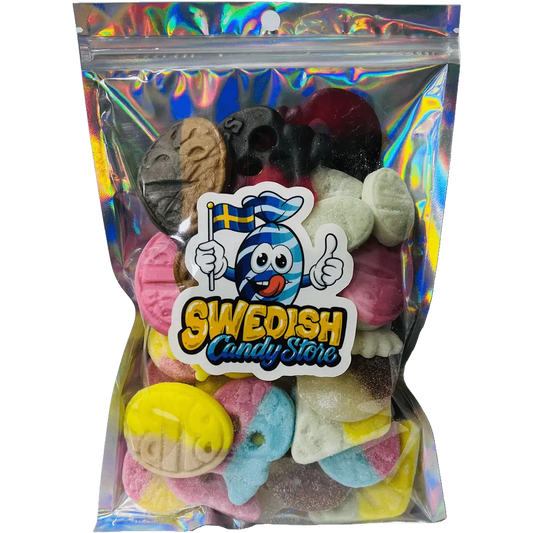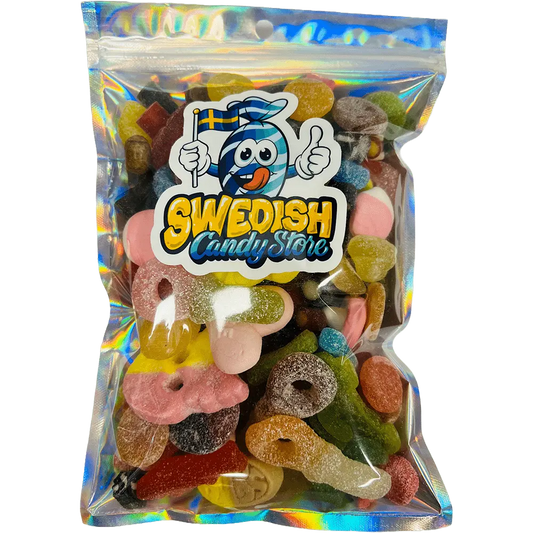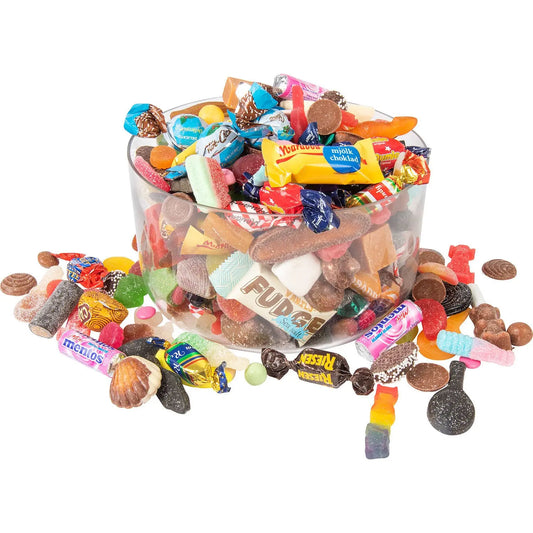

That black gummy you thought would taste like regular licorice just hit your tongue with a tiny salty thunderclap. So, why is Swedish candy salty? The short answer is salmiak: a bold Nordic flavor made with ammonium chloride that gives certain Swedish licorice candies their famously savory, mineral-like bite.
For plenty of Americans, it is a plot twist. You expect sweet. You get sweet, herbal licorice, salt, and a little tingle all at once. For generations of Swedish candy fans, though, that contrast is not weird at all. It is the point.
Why Is Swedish Candy Salty? Meet Salmiak
Salmiak is the Swedish word commonly used for ammonium chloride, the ingredient behind salty licorice. Despite the name, it does not taste like sprinkling table salt over a gummy bear. Its flavor is sharper and more complex: salty, slightly bitter, mineral-forward, and sometimes a little cooling or prickly on the tongue.
It is usually paired with licorice, whose root has an earthy, naturally sweet, almost medicinal flavor. The two work because neither one is shy. Sweet licorice softens the edge of salmiak, while salmiak stops the candy from becoming one-note sugary. The result can be chewy, intense, and strangely impossible to ignore.
Think of it less like a sweet treat wearing a salt costume and more like a proper flavor category. Salty licorice sits somewhere between candy, snack, and dare from your most adventurous friend.
It Started With a Nordic Taste for Big Flavor
Salmiak has deep roots in Northern European confectionery, particularly in Sweden, Finland, Denmark, Norway, and the Netherlands. Ammonium chloride was historically used in medicinal preparations, including cough remedies. Over time, its distinctive taste moved from the medicine cabinet into candy, where Nordic makers turned it into an actual craving.
Why did it stick around? Climate, culture, and taste all play a part, but there is no single magical answer. Nordic food traditions have long made room for salty, sour, smoked, bitter, and fermented flavors. A candy that balances sweetness with a briny kick makes sense in a food culture that does not insist dessert must be purely sugary.
Swedish candy also tends to treat licorice seriously. In the U.S., black licorice can feel like the forgotten jar at the bottom of a holiday candy dish. In Sweden, licorice gets the full star treatment: soft foam, hard candy, chewy bites, chocolate-covered pieces, sour shells, fruit pairings, and yes, enough salmiak to make first-timers pause mid-chew.
Salty Does Not Mean Every Swedish Candy Tastes Like Licorice
This is where the Swedish candy rumor needs a gentle correction. Not all Swedish candy is salty, and not all Swedish licorice contains salmiak. Sweden makes plenty of fruit gummies, fizzy sours, marshmallowy foam candies, chocolate, toffee, and sweet licorice that have nothing to do with that salty black-candy experience.
Even within salty licorice, intensity varies wildly. A mild piece may have a sweet outer shell and a soft, slightly salty center. A stronger one can be coated in salmiak powder and announce itself before you have finished the first bite. Some are round and creamy; others are sour, smoky, or aggressively salty in a way that inspires either devotion or dramatic facial expressions.
Packaging can offer clues. Look for words such as “salmiak,” “saltlakrits,” or “salty licorice.” “Lakrits” means licorice, but it does not automatically mean salty. If you are easing in, choose a sweet-and-salty mix or a softer licorice foam rather than going straight for a heavily powdered black piece. No need to cannonball into the deep end on day one.
What Does Salmiak Actually Taste Like?
The first taste depends on the candy, but salmiak usually arrives in layers. There may be sugar or fruitiness first, then herbal licorice, followed by a salty mineral note that lingers longer than you expect. Some people compare it to salted caramel only because of the sweet-salty contrast, but the flavors themselves are miles apart.
A better comparison might be this: if sour candy gives you a bright citrusy zap, salmiak gives you a darker, savory jolt. It is not acidic in the same way. It feels more like a flavor that belongs in the shadows, with a black gummy jacket and a very strong opinion.
Your reaction may be immediate. Some people love the complexity from bite one. Others need a few tries before their brain stops expecting a standard sweet. And some people decide it is absolutely not for them, which is fair. Candy is supposed to be fun, not a personality test.
Why Americans Are Suddenly Curious About It
Swedish candy has become a major online snack obsession because it offers more texture, flavor variety, and pick-and-mix chaos than the average convenience-store candy aisle. Salty licorice is the category people keep hearing about because it is so different from familiar American sweets.
It also makes a great shared tasting moment. Put a few salmiak pieces in a candy bowl, tell everyone nothing, and watch the reactions. There will be someone who says, “Wait, I kind of love this.” There will be someone reaching for water. Both responses are part of the experience.
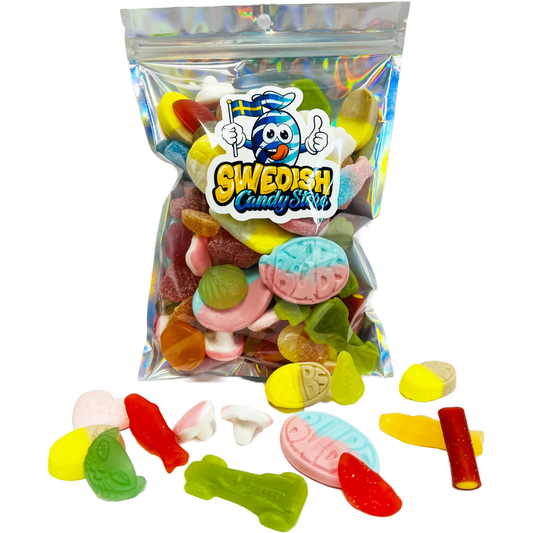
The best way to try it is alongside other Swedish styles. Build a mix with fruity gummies, sour foam, sweet licorice, and a handful of salty licorice pieces. That gives your palate a reset between bites and lets you figure out whether you prefer gentle salty-sweet candy or full-power salmiak. At Swedish Candy Store, that means you can play candy DJ instead of committing to one mysterious black bag.
A Quick Note on Ingredients and Enjoyment
Salmiak candy is meant to be enjoyed as candy, not eaten by the handful like trail mix. The ammonium chloride flavor is strong for a reason, and individual recipes can differ significantly. If you have a medical condition, dietary restriction, or ingredient concern, read the product label and check with a qualified healthcare professional when appropriate.
Licorice itself can also be a consideration for people who need to watch certain ingredients, especially if they consume a lot of it. Most people are simply having a few pieces for the flavor adventure, but labels matter. The good news is that Swedish candy comes in a huge range of options, so skipping salty licorice does not mean skipping the party.
The Real Appeal Is the Contrast
Salmiak is proof that candy does not have to choose between sweet and interesting. Its salty edge makes the sugar taste brighter, the licorice taste deeper, and the whole chew feel more grown-up without becoming precious about it. It is a weird little flavor miracle, if you are into that sort of thing.
Start mild, keep an open mind, and save your verdict until the second or third piece. The first bite may surprise you. The next one might just turn you into the person guarding the salty licorice bag at movie night.